
Selective Laser
Trabeculoplasty
Selective Laser Trabeculoplasty (SLT) is a laser procedure used to lower eye pressure in people with Open-Angle Glaucoma. It works by focusing on the trabecular meshwork, which is the eye’s natural drainage system at the front of the eye. This treatment causes changes that help fluid drain better and reduce pressure.
SLT can also help people who already use eye drops. The laser is carefully adjusted to stimulate the drainage pathway without harming nearby tissue.
-
SLT is for patients with open-angle glaucoma who need better control of their eye pressure. It can be used by itself or along with eye drops.
-
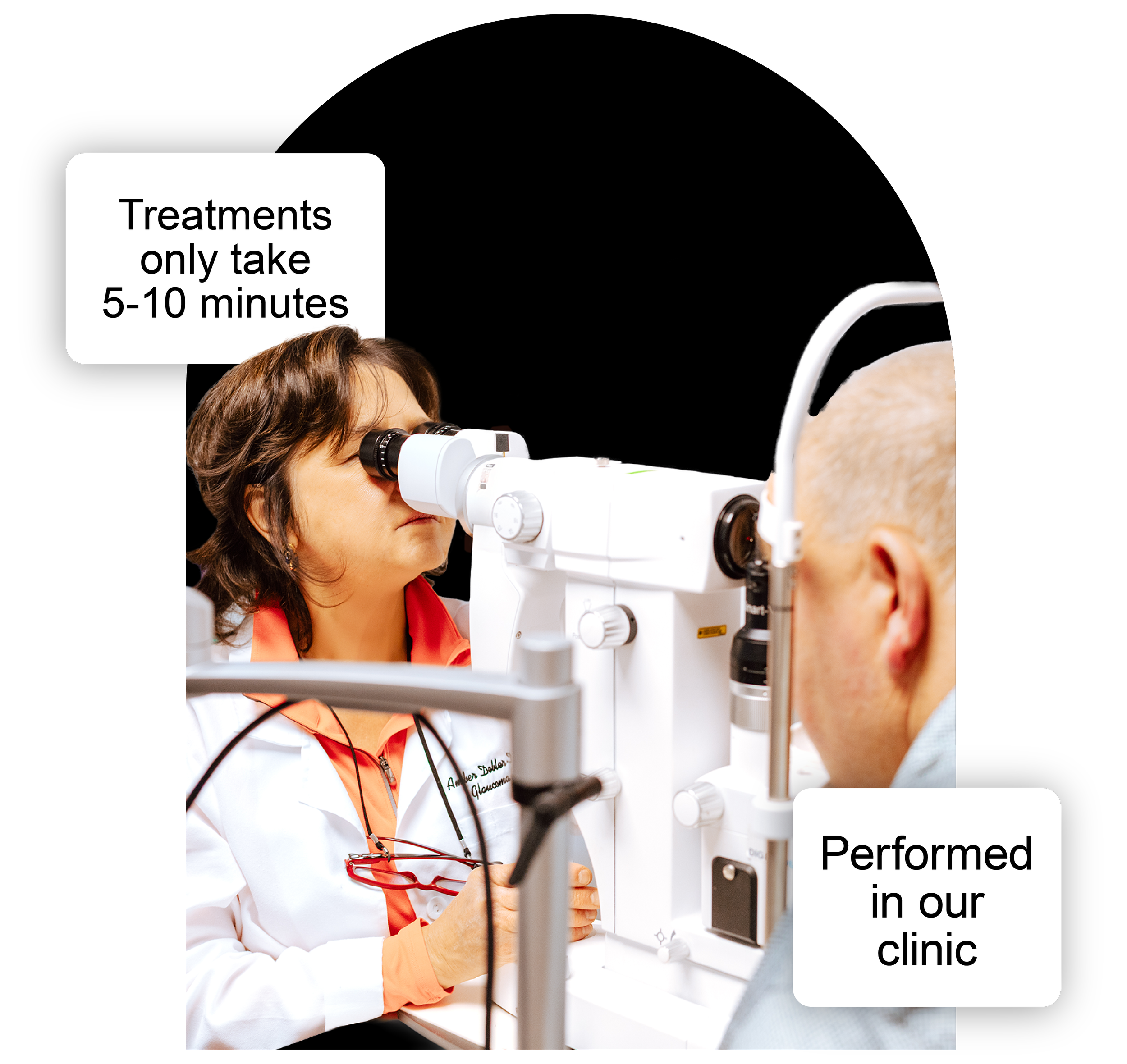
Your treatment will be performed in a specially equipped laser room in the clinic. Once you have been checked in, drops will be used to numb your eye and check the pressure. No injections or needles will be used.
First, you will receive an eye drop, which helps prevent a rise in eye pressure after the procedure. Then a drop of anesthetic will be applied to numb the eye.
Dr. Dobler-Dixon will place a special lens on your eye to help focus the laser on the trabecular meshwork. This lens also prevents your eye from blinking and keeps the eye still during the treatment. A clear gel is placed between the eye and the lens to protect the surface of your eye.
You will then hear a series of clicks and may see flashes of light as the laser treats your eye. There is virtually no pain with the procedure. You will feel the lens slowly rotating on the surface of the eye as the Dr. Dobler-Dixon treats various parts of the trabecular meshwork. The procedure generally takes 5-10 minutes.
-
Unfortunately, there is no cure for glaucoma. It is a long-term condition that needs ongoing care and treatment. SLT can lower your eye pressure, but it cannot restore vision that has already been lost.
-
SLT has fewer side effects than many other glaucoma treatments, such as eye drops, other lasers, or surgery. Some people may have mild inflammation after the laser, but this is not common. You might get anti-inflammatory drops if needed. There is a small chance of a short-term rise in eye pressure after the treatment, but this is usually managed with glaucoma medications.